

[Keynote Speech] For Tohoku to Remain Tohoku
—Aiming to Be a Destination Chosen for Quality: Leveraging International Standards
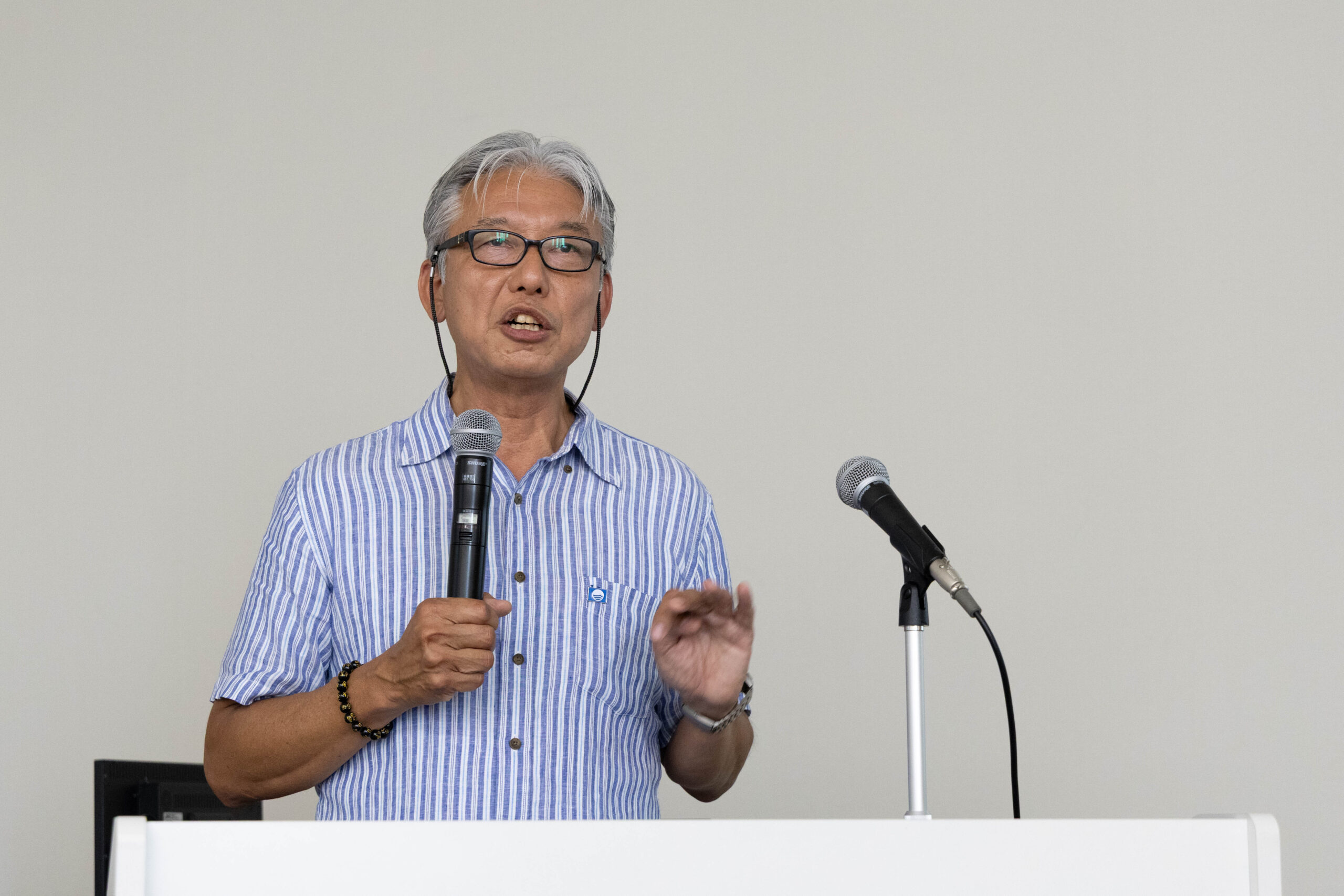
The "Practical Symposium on Sustainable Tourism Destination Management in Sendai" opened with a keynote speech by Suguru Takayama, Representative Director of the Japan Alliance of Responsible Travel Agencies (JARTA).
Delving into the core theme of the symposium—"redefining tourism as a tool for regional management"—Takayama drew on domestic and international case studies as well as his own extensive experience to present the perspectives and practical approaches required for future community development.
■ Tourism is Not the "Goal," but a "Means to Solve Regional Issues"
At the beginning of his speech, Takayama raised an alarm over the current tendency to treat "increasing tourist numbers" or "infrastructure development" as the ultimate goals.
He emphasized that tourism should inherently be a "means" to solve the challenges faced by a region.

Redefining Tourism as a Tool for Regional Management
For instance, Takayama introduced regions where the influx of visitors from the outside led to the development of essential living infrastructure like healthcare and education. He also highlighted cases where wildlife was shifted from hunting targets to tourism resources, successfully balancing conservation with economic value. Tourism, he noted, has the potential to bring value to three dimensions: the economy, the environment, and society.
Furthermore, regarding overtourism, he pointed out that the essence of the problem is not simply the number of tourists, but rather "when a region is utilized in a way that residents do not desire." Citing examples like littering and the impact on daily life, he stated: "It is vital to have a perspective that measures not just tourist satisfaction, but resident satisfaction (social capacity)." He urged the importance of tourism ethics and clear rulemaking that respect local culture and daily life.
He also addressed the necessity of shifting "from quantity to quality." Pointing to initiatives like the community-led beach cleanups on Yoron Island, he explained that the proactive actions and mindset of local residents themselves become the destination's charm, attracting visitors who resonate with those values. Shifting to such a "destination chosen for quality" is what leads to sustainable value creation.
■ Frameworks to Guide Practice: "Tokyo Declaration 2030" and the "Point-Line-Area Model"
To translate these philosophies into practice, Takayama presented two key frameworks:
The "Sustainable Tourism Tokyo Declaration 2030 Vision"
This declaration outlines six core guidelines:
1.Sustainable management
2.Contribution to the local economy and society
3.Cultural protection
4.Environmental conservation
5.Customer satisfaction and network expansion
6.Utilization of international standards and certifications
Takayama positioned this as an "action declaration pledging practice," emphasizing the importance of proactive engagement by every single participant. (The declaration was also read aloud during the session.)
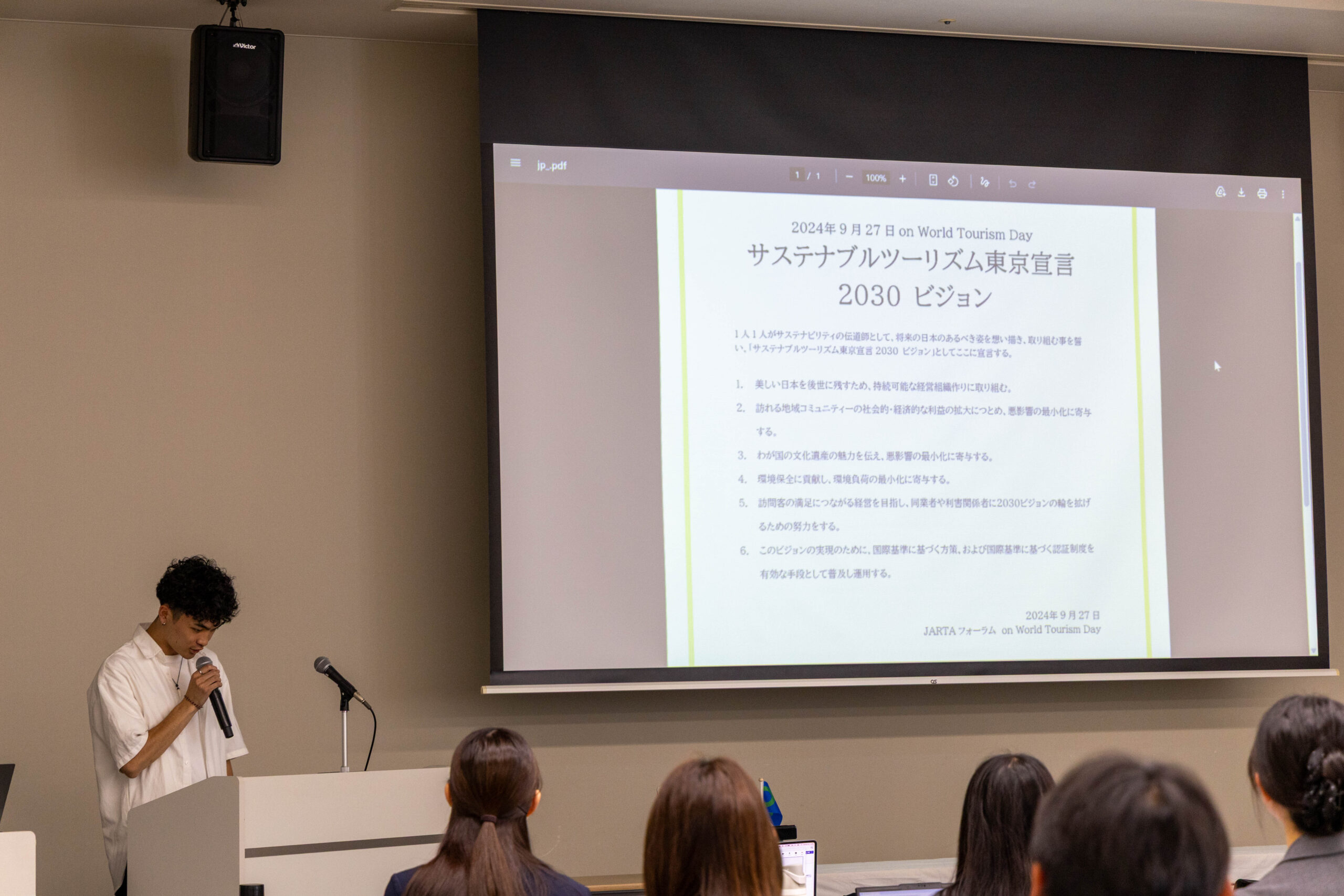
The declaration was also read aloud during the session.
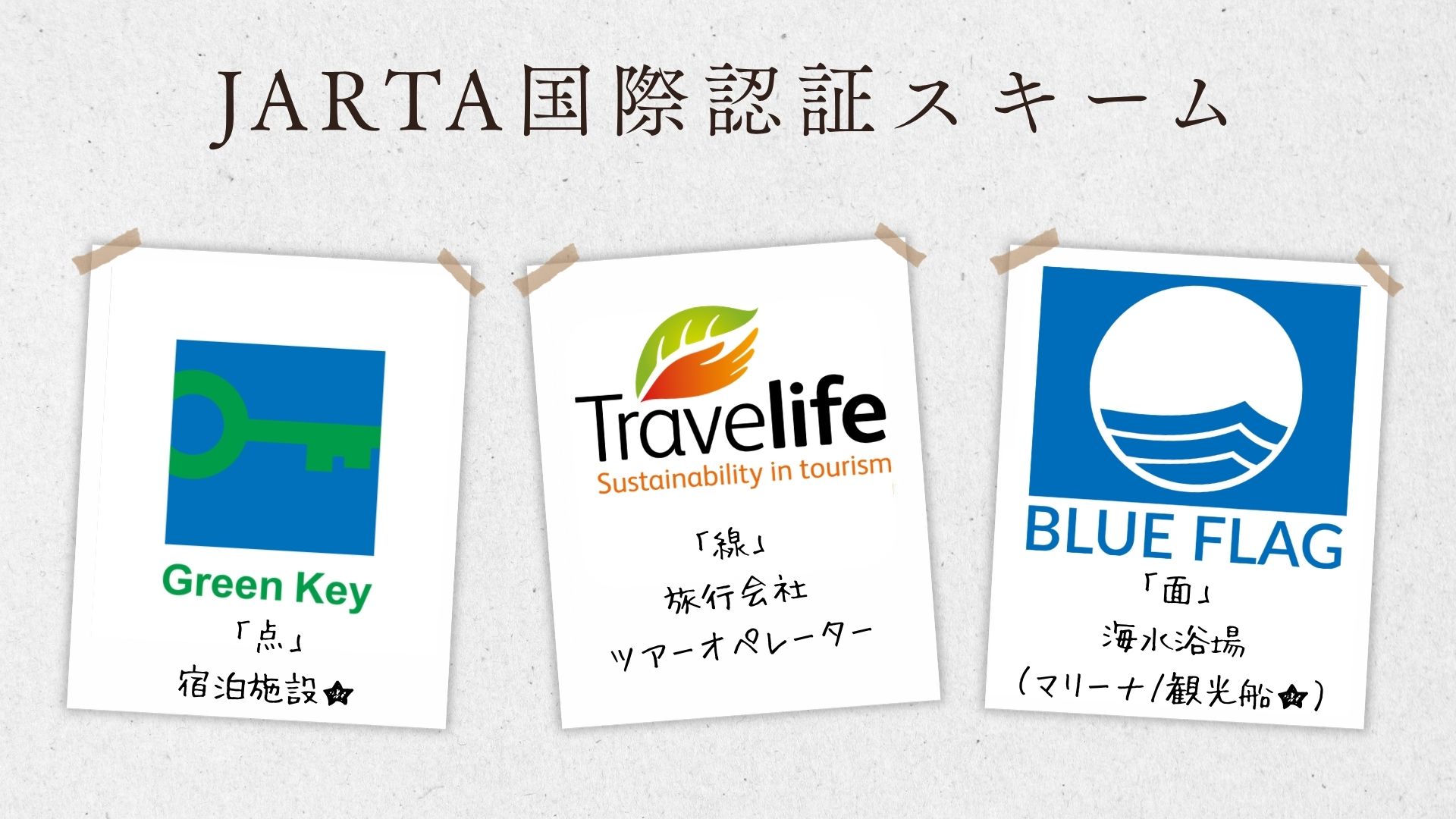
The "Point-Line-Area" Collaboration Model
This approach views business operators (like accommodations) as "Points," distribution channels (like travel agencies) as "Lines," and the region as a whole or DMOs as "Areas." Sustainable tourism is achieved only when these three elements cooperate. The shared understanding here was one of "total optimization"—if even one element is missing, sustainability for the entire region cannot be realized.
■ Integrating International Standards with Japanese Sustainability
In the second half of the speech, Takayama touched upon the utilization of international certifications such as Green Key, Travelife, and Blue Flag.
He explained that these are effective tools to clarify "what needs to be practiced" and to prompt behavioral change, adding that the greatest value lies within the "acquisition process itself."
However, he also noted that simply aligning with overseas standards is not enough.
He argued that values deeply rooted in Japanese education and culture—such as soji (cleaning/tidying), mutual aid, and a strong sense of ethics—are unique strengths that can be shared with the world. He emphasized the importance of recognizing these values and leveraging them within the context of tourism.
Furthermore, he stressed the need to constantly question whether short-term tourism gains are leading to long-term degradation of nature and culture, citing examples like the excessive illumination of cultural properties or the feeding of wild animals. He underscored the vital importance of maintaining the mindset of: "Is this truly benefiting the region?"
■ Toward "Tourism for the Region"—The Future JARTA Aims For
In concluding his speech, Takayama once again emphasized the importance of anchoring all efforts in "tourism for the region."
When local governments, business operators, and residents share a common understanding, clarify their respective roles, and implement community-led initiatives that prioritize resident happiness above all else—the accumulation of these efforts becomes the key to future sustainable regional development.
For Tohoku to remain Tohoku.
The answer lies in evolving into a region chosen not for its "quantity," but for its "quality." The keynote speech concluded as a thought-provoking session that mapped out a concrete path forward.