


【Certified Facility Introduction】 Aloft Tokyo Ginza: How Community Activities Sparked a “Shift in Mindset” Leading to Over 10,000 kg of Annual Plastic Reduction
- Facility Overview
Located in the vibrant district of Ginza, Aloft Tokyo Ginza is a lifestyle hotel offering sophisticated spaces such as a rooftop bar. Despite being an urban property just a three-minute walk from Higashi-Ginza Station, the hotel has, in its second year of certification renewal, strongly advanced environmental impact reduction and community coexistence—driven by the individual actions of each staff member.
- Good Practices
By embedding community beautification activities into its organizational culture, the hotel has achieved remarkable results in waste reduction.
- A Street Corner Flower Bed That Transformed Staff Awareness: To overcome the limitation of having no green space on the property, the hotel collaborated with Chuo Ward to install a small flower bed on a nearby street corner.
Departments take turns watering and replanting, and all staff participate in local cleanup activities.
These outward-facing initiatives dramatically heightened staff ownership and engagement.
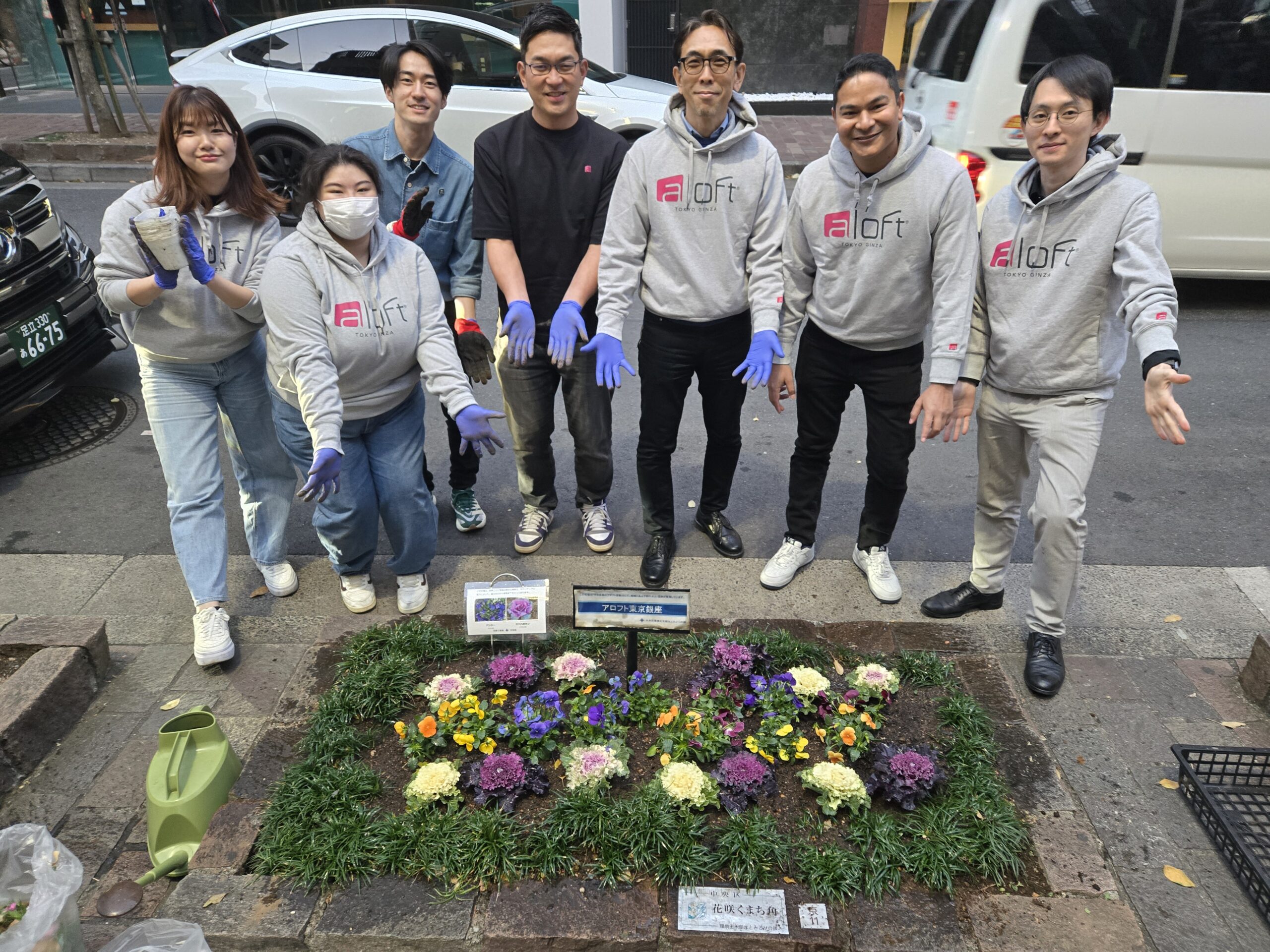
- 30% Waste Reduction and Over 10,000 kg Less Plastic Annually: The mindset shift fostered through community cleanups led to a significant improvement in waste sorting accuracy within the hotel. Compared to 2024, plastic waste was reduced by approximately 30%, amounting to over 10,000 kg per year—a major achievement.
- Introducing Water Dispensers to Eliminate Plastic: Currently, canned drinking water is provided in guest rooms, but the hotel is preparing to introduce water dispensers to further reduce resource consumption. This transition aims to reduce container usage and waste, moving toward more sustainable guestroom operations.
- Challenges
The next challenge is not only sharing the results of these initiatives but also finding ways to actively gather guest feedback.
- Designing Two-Way Communication: The hotel is exploring a system that goes beyond existing reservation platforms by using a unique QR code to collect guest opinions and suggestions at check-in. With international guests making up about 40% of visitors—many of whom are receptive to sustainability—the hotel aims to build a model of sustainability that evolves together with its guests.
- Message
“Sustainability is not merely an obligation for hotels—it is a responsibility for each individual. In my home country of Nepal, even the snowy mountains are turning black, a sign of severe environmental change. Because I have witnessed these global-scale changes firsthand, I believe it is essential that each of us, regardless of nationality or position, begins taking action today.”