Creating a world where tourism brings joy to both travelers and local communities
Three-pronged approach of "Point, Line, and Area"
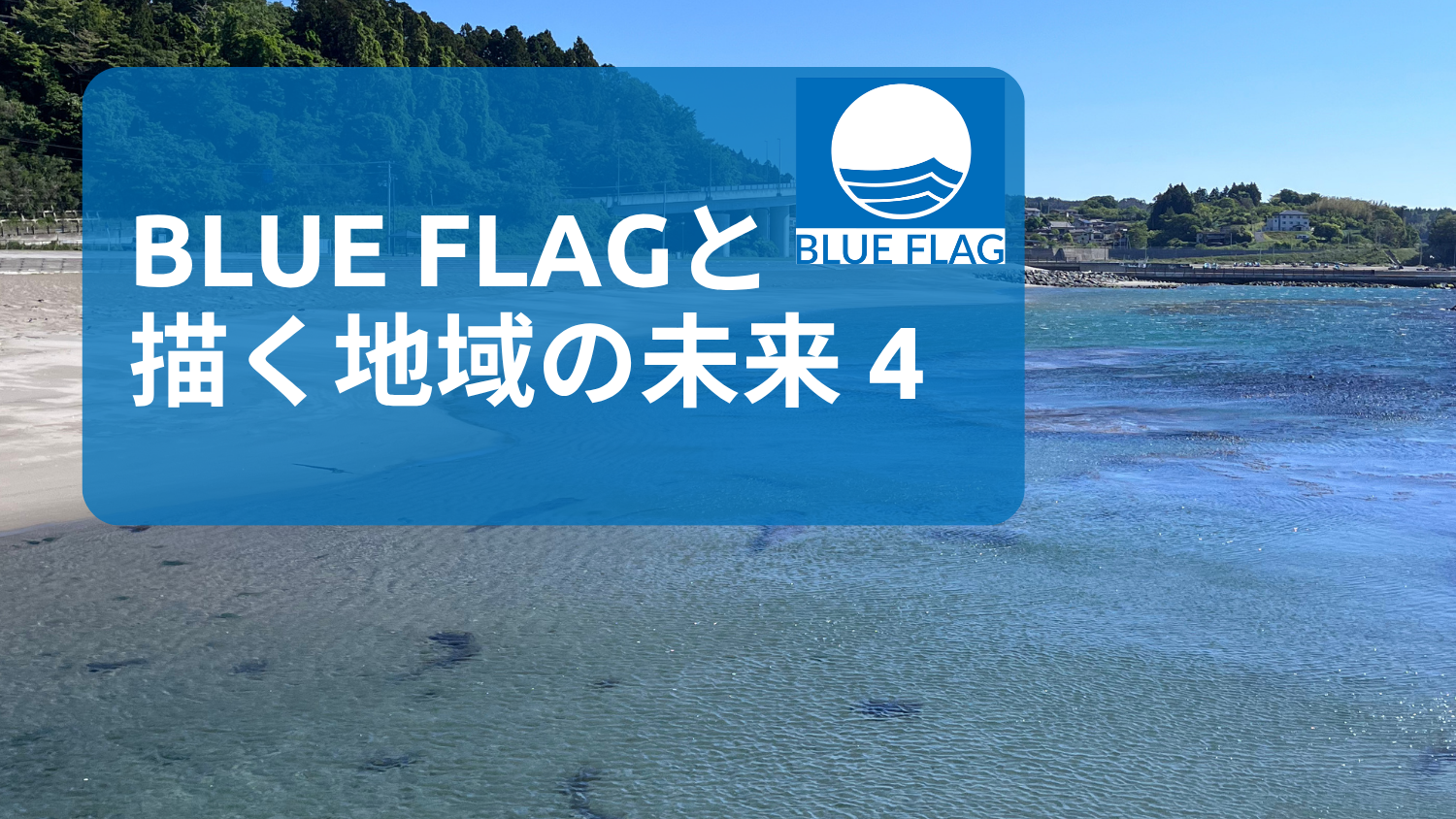
In our serialized article, "Shaping the Future of Local Communities with Blue Flag," brought to you by JARTA (Japan Alliance of Responsible Travel Agencies),
we have explored the foundational principles of Blue Flag, advanced examples from Europe and North America, and the critical importance of "returning benefits to local communities beyond certification" in Sanriku, Tohoku.
For this final installment, under our slogan—"Creating a world where tourism brings joy to both travelers and local communities"—we introduce the core concept of "Points, Lines, and Areas" (Dot, Line, and Plane), which addresses the challenges currently facing Japanese tourism and outlines how we will walk alongside local communities through Blue Flag.
Breaking Away from the "Consumed Region" and Embracing Low-Impact Tourism
Japanese tourism is currently facing a major turning point.
Originally, a region's "local DNA"—its natural environment, culture, and history—should form its unique appeal and serve as the foundation for sustainable tourism. In reality, however, tourism policies that prioritize temporary buzz and short-term visitor attraction are frequently given precedence.
For example, while night-time content such as projection mapping staged against cultural assets can drive visitor numbers, it often fails to fully convey the intrinsic value and background of the cultural resources themselves.
Furthermore, as natural environments and sacred sites—cherished and protected by local residents since ancient times—are rapidly diffused across social media, issues regarding visitor etiquette frequently arise, leading to friction with local communities in various regions.
While the phrase "sustainable tourism destination development" has become widespread, measures often lean toward symptomatic treatments or one-off projects rather than addressing root problems and enhancing community-led value, making it difficult to achieve essential community development.
This is precisely why we believe the mindset of "low-impact tourism" will become increasingly vital moving forward—minimizing the burden on nature and culture while passing their value on to the next generation, rather than easily consuming regional resources.
Regional Governance Through "Points, Lines, and Areas" Promoted by JARTA
To develop tourism sustainably and pass down regional DNA into the future, management that protects and nurtures value across the entire region is indispensable.
To achieve this, JARTA emphasizes a three-pronged approach: Points, Lines, and Areas.
Points
The mindset reform and actions of every individual involved in tourism.
Reviewing daily business activities from a sustainability perspective across accommodations, food and beverage services, and activity operators, and translating them into everyday practice serves as the starting point.
Lines
Connecting the valuable "points" that exist within a region to present the history, culture, and natural charms of the area to travelers as a compelling narrative.
Travel agencies and tourism planners are expected to organically link these individual resources to communicate the comprehensive appeal of the region.
Areas
Governance focused on managing the entire region and positioning tourism as a shared challenge for both local government and society.
It is essential to build systems where diverse stakeholders share common goals and continuously cooperate to protect and nurture regional value.
The Blue Flag certification is precisely one of the global frameworks designed to construct this "area-wide" approach.
Blue Flag cannot be acquired by a single facility or business operator alone.
Led by local governments, diverse stakeholders—including local residents, tourism operators, educational institutions, NPOs, and lifeguards—must collaborate to continuously maintain various standards concerning water quality, environment, safety management, and environmental education.
In other words, the very process of aiming for Blue Flag certification builds coast-centric regional governance and lays the foundation for sustainable regional management.
"Sustainability Education" as a Common Foundation
There is an indispensable common foundation required to truly make these "Points, Lines, and Areas" function effectively.
That foundation is sustainability education.
We believe that understanding sustainability should become a fundamental literacy shared by local residents, tourism operators, and travelers alike—much like reading, writing, and arithmetic learned in early childhood.
Fostering a spirit of "Touristship"—where people learn together and practice responsible behavior—passes down local DNA to the next generation and contributes to the overall enrichment of the community.
Furthermore, it is desirable for sustainability education to be increasingly integrated into regulatory systems for accommodations and travel agencies, guide training programs, and various educational workshops.
Only when the roots of education run deep can individual "points" grow, connect into "lines," and ultimately expand into sustainable "areas" like Blue Flag across the entire region.
As a "Co-Traveler" Walking Alongside the Community
On October 16, an important event related to Blue Flag is being held in Sanriku.
JARTA is much more than a mere certification application support organization.
From building educational foundations and forming local networks to promoting collaboration among diverse stakeholders, we aim to be a "co-traveler (bansosha)" who stands closely by local communities to support the creation of sustainable systems.
So that the Blue Flag may bring pride and happiness to both travelers and local communities alike.
Alongside communities across Japan, JARTA remains committed to working toward a sustainable future for our coastlines and regions.
(End of Series)