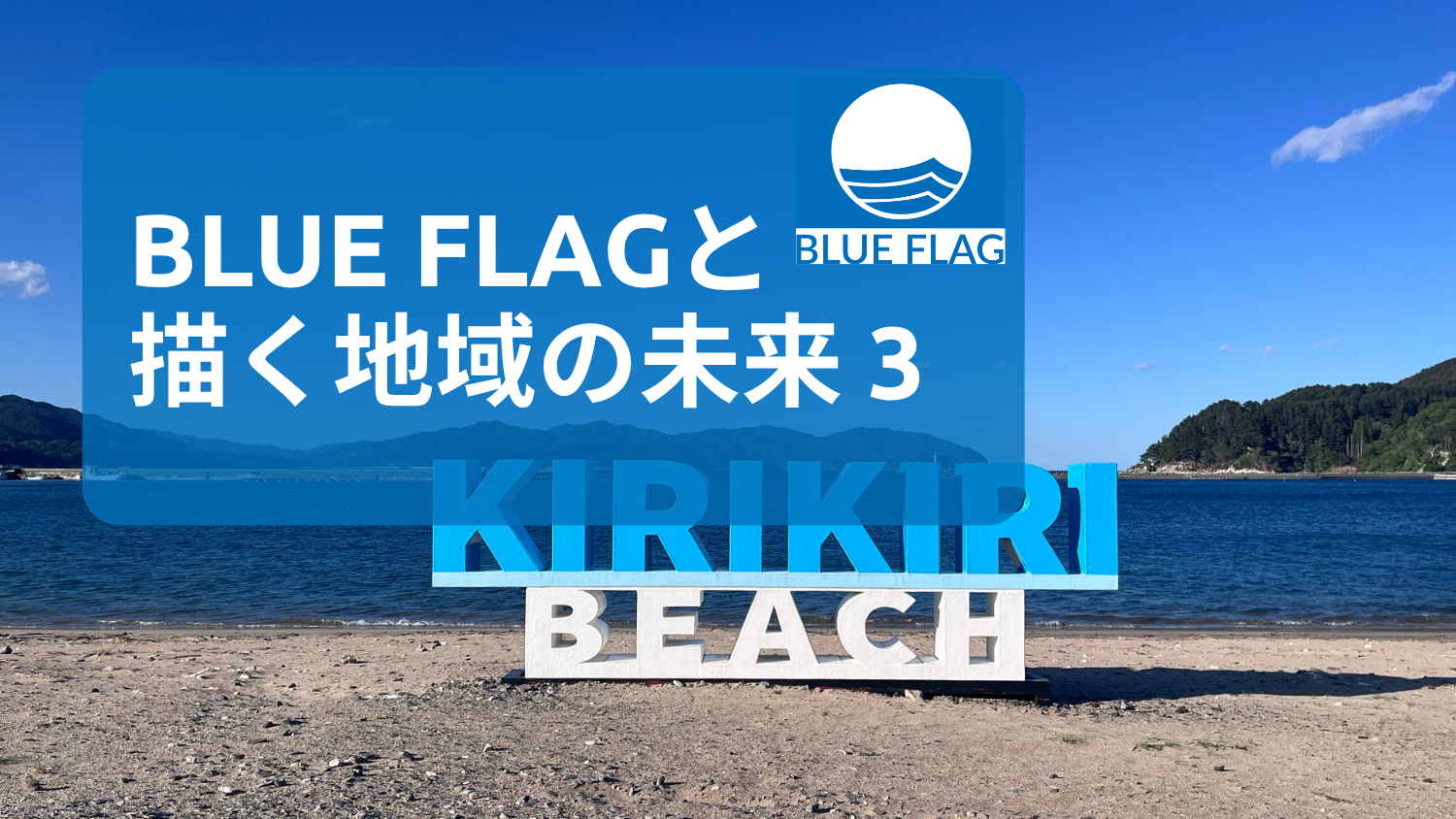
東北・南三陸から考えるブルーフラッグの未来〜「認証」の先にある真の地域還元〜
"Shaping the Future of Local Communities with Blue Flag," a serial article brought to you by JARTA (Japan Alliance of Responsible Travel Agencies).
In the second part of this series, drawing on preceding examples from Europe and North America, we discussed how Blue Flag serves as a "tool for community benefit" that brings significant advantages not just to environmental conservation, but also to local business operators and residents.
For this third installment, we finally approach the core of our series. As environmental improvements along coastal areas progress following the earthquake disaster, we examine the current situation in the Tohoku and Sanriku regions—where the acquisition of Blue Flag is spreading—and consider what "true community benefits" that do not end as a transient event should look like.
From a Symbol of Reconstruction to a "World-Standard Ocean"
Since the 2011 Tohoku Earthquake, coastal areas in the Tohoku region have spent a long time advancing environmental improvements, constructing seawalls, and reviving coastal areas to restore their connection with the ocean.
In recent years, running parallel to this path of reconstruction and backed by various support and subsidy systems such as the Japan Tourism Agency's Blue Tourism promotion initiatives, the movement to acquire Blue Flag certifications in the Tohoku area (including Kesennuma, Rikuzentakata, and Sanriku) has been expanding rapidly.
Proving once again to global standards that the ocean—once a threat—is now a "beautiful ocean that everyone can enjoy safely and securely" holds immense meaning and hope for Tohoku’s reconstruction.
Challenges to Prevent It from Ending as an "Administrative Certification Event"
Utilizing various support systems, having local governments take the lead in clearing strict international standards, and raising the Blue Flag is a wonderful first step. However, the challenge we must face most directly is: "Starting the day certification is received, who will utilize the flag and how?"
A common pattern in Japanese regional revitalization is that while the certification process is pursued enthusiastically under administrative leadership, the utilization after acquisition remains insufficient, causing the effort to end with ceremonies and a few isolated events.
As mentioned in Part 2, Blue Flag is not the "goal." How can we convert this international certification—acquired through generous support systems—into benefits for local businesses (the private sector) and residents, and create a self-sustaining mechanism (an economic cycle)? That is the greatest theme currently demanded of the Tohoku area.
What is "True Community Benefit" Pioneered by the Sanriku Ocean?
So, what exactly does "true community benefit" look like? Let's consider the example of Sanriku, where events related to Blue Flag are held on October 16.
Sanriku possesses incomparable appeal: abundant seafood and a strong community that has coexisted with nature. The world-standard guarantees of water quality, safety, environment, and education provided by Blue Flag add powerful added value to this appeal.
- Spillover Effects on Tourism and Food ServicesThe brand image of a "world-standard safe and clean ocean" attracts new tourist demographics with high environmental awareness (sustainable travelers). It is essential to create a flow of consumption that extends beyond coastal experiences to local seafood restaurants and lodging facilities.
- Creation of Private-Sector Marine BusinessesThis serves as fertile ground for generating new private-led services independent of government reliance, such as universal tourism planning utilizing enhanced barrier-free accessibility, or commercializing year-round environmental education programs.
- Fostering Pride and Passing It on to the Next GenerationBy providing environmental education (a living learning space) where local children can take pride in knowing that "our ocean meets world standards," we nurture the human resources who will shoulder the future of Sanriku.
Blue Flag is not a signboard for the administration; it is a tool for the people who do business and live in the community.
Preview of the Next Issue: Why JARTA Promotes Blue Flag
To avoid "obtaining it and stopping there" and instead bring true benefits to the community, a continuous support system connecting the government, private sector, and residents is indispensable.
In the final fourth installment, we will share why we, the Japan Alliance of Responsible Travel Agencies (JARTA), promote these activities as the Blue Flag secretariat. We will convey our passion for sustainable tourism, walking alongside communities not merely as an administrative procedure window, but as a "co-traveler (bansosha)."
(continues to Part 4)